 Labelly
Decoding the Mandatory UK Nutrition Information Panel
Understanding all required elements on UK food labels: energy, macronutrients, salt, and how values are presented per 100g and per portion.
Overview of Mandatory Elements
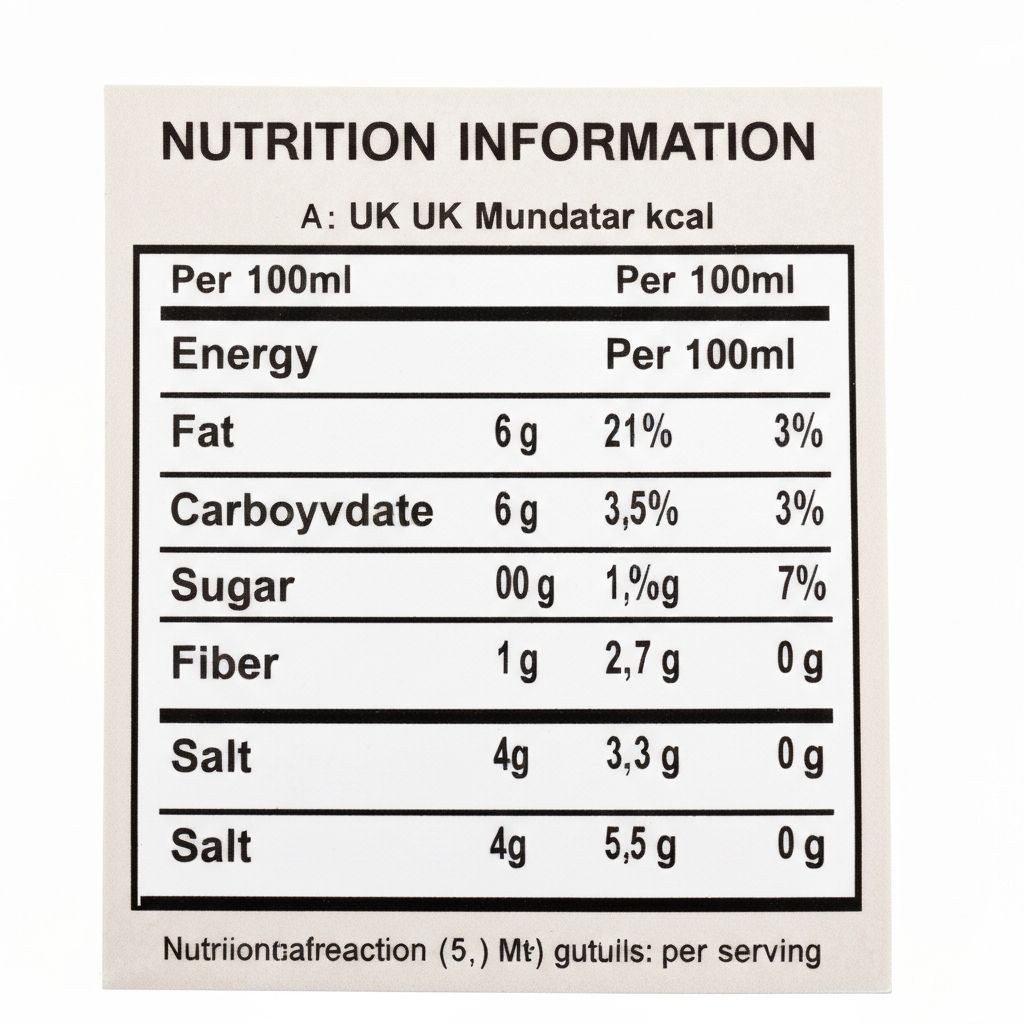
UK and EU food labelling regulations require manufacturers to display a mandatory nutrition information panel on food packaging. This panel must include energy and seven key nutrients: fat, saturated fatty acids, carbohydrate, total sugars, fibre, protein, and salt. Information is presented in two columns: per 100 grams or millilitres of product, and per portion where serving size is declared.
Energy Values: kJ and kcal
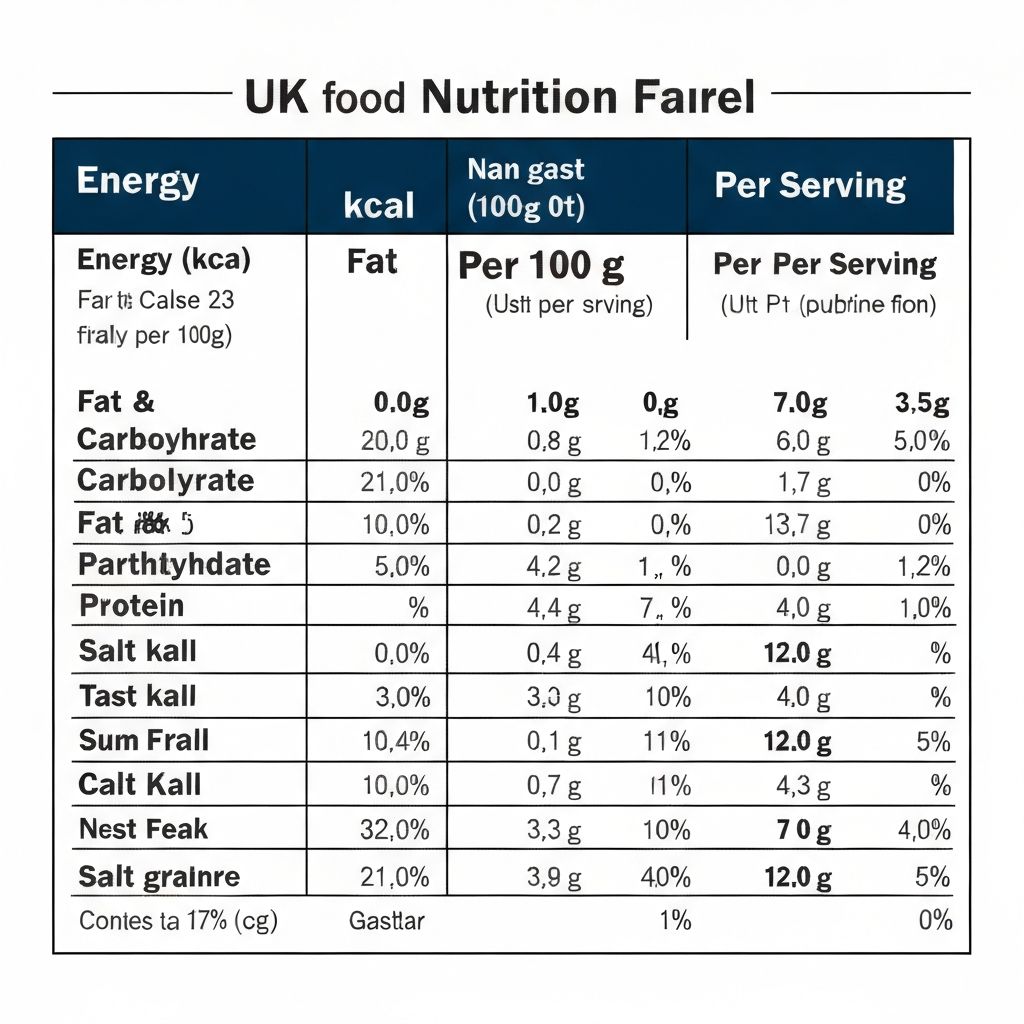
Energy content is always displayed in both kilojoules (kJ) and kilocalories (kcal). One kilocalorie equals 4.184 kilojoules. The kJ value is listed first, followed by the kcal value. Both units measure the same energy content but using different scales. In everyday contexts in English-speaking countries, kilocalories (kcal) are more commonly referenced, though kilojoules appear on all UK labels for international standardisation.
Energy values are calculated using established conversion factors that account for the different energy yielded by carbohydrates, proteins, and fats during digestion.
Fat and Saturated Fatty Acids
The nutrition panel displays two fat values:
- Total Fat: The sum of all fatty acids in the product, including saturated, monounsaturated, and polyunsaturated fats
- Saturated Fatty Acids: A subset of total fat, referring specifically to saturated fats
Saturated fat is a type of fat that is solid at room temperature. The saturated fat value is always less than or equal to the total fat value. Both values are important for understanding the fat composition of a product.
Carbohydrates and Sugars
The nutrition panel displays two carbohydrate-related values:
- Carbohydrate: The total amount of carbohydrates in the product, including sugars, starch, and fibre
- Total Sugars: A subset of carbohydrates, referring specifically to simple sugars including monosaccharides and disaccharides
Total sugars includes both naturally occurring sugars (such as lactose in milk or fructose in fruit) and added sugars. The total sugars value is always less than or equal to the carbohydrate value. Understanding the proportion of sugars within total carbohydrates provides insight into the product's composition.
Fibre
Dietary fibre is a type of carbohydrate that is not fully digested. Fibre content is displayed separately from other carbohydrates. The mandatory panel displays total fibre. Higher fibre content may indicate a more processed plant-based product or a product with whole grains or legumes. Fibre values vary considerably across food categories.
Protein
Protein content is displayed as total protein in grams per 100g or per serving. Protein is calculated from the nitrogen content of the food using a standard conversion factor. The protein value includes all amino acids present, whether from the primary ingredient or from added protein sources. Protein content varies widely depending on food category.
Salt
Salt content is displayed in grams per 100g or per serving. The salt value represents sodium converted to sodium chloride (salt) using the conversion factor: salt = sodium × 2.5. If a label lists sodium separately, salt can be calculated using this formula. Salt content regulations set upper limits for certain food categories, and many manufacturers have worked to reduce sodium content in response to public health guidelines.
Per 100g vs Per Portion Values
Information is presented in two columns. The per 100g column shows nutrient density and allows comparison between products regardless of package size. The per-portion column depends on the manufacturer-declared serving size, which varies between products. To compare products fairly, use the per 100g values consistently rather than mixing per 100g and per-portion values.
Reference Intake Percentages
Most UK nutrition panels include a third column showing Reference Intake (RI) percentages. These percentages indicate how much of the average adult's daily recommended intake a single portion provides for energy and key nutrients. RI percentages are optional on the nutrition panel but commonly included. The percentages are calculated using standardised reference values established in food labelling regulations.
Units of Measurement
All values on the nutrition panel are displayed in grams (g) or milligrams (mg). For some nutrients, milligrams may be used for very small quantities. The column headers always clearly state the units: grams or milligrams per 100g or per portion. Understanding the units is essential for accurate interpretation and comparison of values.
Explore other labelling concepts
Discover additional detailed guides about UK food labelling systems and nutrition information presentation.
View all labelling explorations →